
AI & Technology
How AI will change Cyprus shipping jobs in 2026
Artificial intelligence is moving from theory into Cyprus maritime operations. Here are the jobs likely to grow, the tasks likely to change and the skills shipping employers will value.
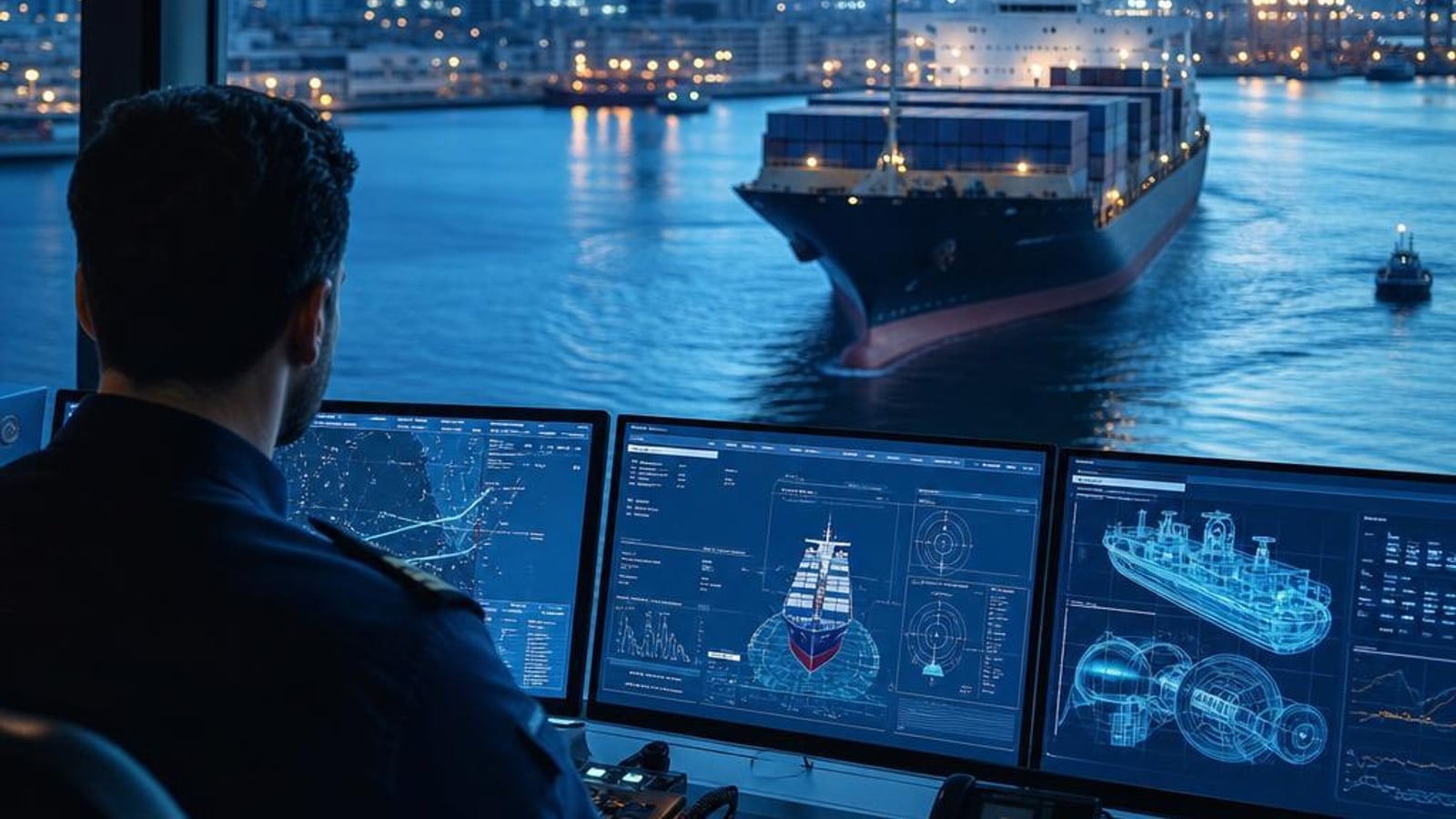
AI is more likely to redesign Cyprus shipping jobs than remove them. The clearest near-term effect will be less repetitive checking, reporting and data entry, with more demand for people who can interpret alerts, manage maritime data, protect connected vessels and remain accountable for operational decisions.
That matters because Cyprus already has the scale to become a maritime AI testing ground. In an August 2026 interview, Cyprus Chief Scientist Demetris Skourides said the Cyprus Shipping Chamber represents about 200 major shipping-related companies whose members own, control or manage more than 2,900 vessels, exceeding 161 million gross tonnes. The sector supports roughly 4,500 onshore professionals and more than 80,000 seafarers.
Those figures point to a sizeable employment market where even modest AI adoption can alter hundreds of roles.
Which shipping tasks can AI change first?
The earliest changes are likely to appear in work that already produces structured data:
- Technical management: predictive-maintenance systems can identify unusual equipment behaviour before a breakdown.
- Voyage operations: optimisation tools can compare weather, speed, fuel use, port congestion and emissions.
- Compliance: regulatory technology can search requirements, cross-check records and prepare evidence for review.
- Safety: systems can flag patterns in incidents, sensor readings and near-miss reports.
- Cybersecurity: connected ships and shore platforms create more activity to monitor and more vulnerabilities to manage.
- Administration: AI can summarise documents, reconcile information and draft routine reports.
The important word is support. Shipping is safety-critical, internationally regulated and exposed to expensive operational risk. An algorithm may recommend an action, but a suitably trained professional still has to challenge the output and own the decision.
Which Cyprus maritime jobs could grow?
AI adoption should create demand at the intersection of shipping knowledge and digital capability. Likely growth roles include:
Maritime data stewards
AI systems are only useful when vessel, maintenance, procurement and compliance data are accurate and consistently defined. Data stewards organise that information, resolve quality problems and help teams understand which records can be trusted.
Digital-twin specialists
A digital twin is a data-based representation of a physical vessel or system. Specialists combine engineering knowledge, sensor data and modelling to test scenarios and monitor performance.
Maritime cybersecurity analysts
As navigation, communications and operational systems become more connected, shipping businesses need people who understand both cyber risk and ship operations. Generic security knowledge helps, but maritime context is a major advantage.
RegTech and compliance professionals
AI can accelerate regulatory research and evidence gathering, but professionals are needed to verify interpretations, document decisions and keep systems aligned with changing rules.
AI product and implementation managers
Shipping companies need people who can translate an operational problem into a technology project, evaluate suppliers, manage trials, train users and measure whether the tool delivers real value.
Drone-inspection and autonomous-systems roles
Skourides identified digital ships, autonomous systems, drone inspections and advanced ship-to-shore communications as areas where Cyprus could become a European testing and validation base. That would create technical, operational, assurance and certification work—not only software jobs.
Will AI replace shipping office jobs in Limassol?
Some tasks will shrink. Manual report compilation, repeated document checks, basic scheduling comparisons and first-pass data review are obvious candidates for automation. Roles built almost entirely around those tasks face pressure.
However, most shipping office positions combine routine work with negotiation, exception handling, regulatory responsibility and relationships across vessels, ports, suppliers, charterers and authorities. AI struggles most when information is incomplete, priorities conflict or a decision carries legal and safety consequences.
The practical risk is therefore not “AI replaces every shipping employee”. It is that an employee who can use AI responsibly becomes more productive than one who cannot.
What skills should Cyprus shipping workers learn?
You do not need to become a machine-learning engineer. For most maritime careers, a stronger plan is:
- Improve data literacy. Learn to question where a number came from, what it measures and whether it is complete.
- Practise AI verification. Treat generated answers as drafts or hypotheses, not facts.
- Understand your workflow. Map the repetitive steps, exceptions and approvals in your role.
- Build cybersecurity awareness. Know how data should be shared and what must never be entered into an unapproved tool.
- Learn basic analytics. Spreadsheet modelling, dashboards and simple database concepts remain valuable.
- Document judgement. Employers will value professionals who can explain why they accepted or rejected an automated recommendation.
For graduates, combining maritime studies, engineering, logistics, law or accounting with practical digital skills may be more employable than a general AI certificate without sector knowledge.
How should candidates show AI capability on a shipping CV?
Avoid vague claims such as “proficient in AI”. Show a controlled business result:
- “Built a maintenance-report workflow that reduced weekly reconciliation time.”
- “Created a dashboard for voyage performance exceptions and documented validation checks.”
- “Tested an approved research assistant for regulatory updates, with human review before circulation.”
- “Mapped data-quality issues across procurement records and proposed a standard taxonomy.”
Never claim savings you cannot support, and do not upload confidential company or vessel information into public AI systems.
What should Cyprus shipping employers do next?
Employers should begin with a defined operational problem rather than buying “AI” as a label. A useful pilot has an owner, approved data, a baseline, a human review point and a clear measure such as downtime avoided, hours saved, false alerts or fuel-performance improvement.
Training should include frontline professionals. A technical team may build the system, but experienced superintendents, engineers, operators and compliance staff know where the exceptions and risks actually sit.
Our analysis
Cyprus has a credible opportunity because maritime expertise, international fleets, regulation and operational data are already concentrated here. The employment prize is not merely using foreign software more efficiently. It is building exportable maritime services—cybersecurity, RegTech, digital twins, validation and specialist implementation—from Cyprus.
The strongest careers will belong to people who can connect three things: maritime reality, reliable data and accountable human judgement.
Sources
FAQ
Frequently asked questions
Will AI replace shipping jobs in Cyprus?
AI is more likely to replace individual tasks than entire occupations in the near term. Repetitive reporting, document checks and first-pass analysis can be automated, while people remain responsible for safety, compliance, negotiation, exceptions and final decisions.
Which AI-related shipping jobs are likely to grow in Cyprus?
Potential growth areas include maritime data stewardship, digital twins, vessel and shore-side cybersecurity, RegTech, emissions analytics, drone inspection, autonomous-systems assurance and AI product implementation.
Do I need to learn coding for an AI-enabled maritime career?
Not necessarily. Most shipping professionals will gain more from data literacy, analytics, safe use of AI tools and strong domain knowledge. Coding is valuable for specialist technical roles but is not required for every AI-enabled job.
How can graduates prepare for Cyprus shipping jobs affected by AI?
Combine a recognised discipline such as maritime studies, engineering, logistics, law, finance or cybersecurity with practical projects that demonstrate data analysis, workflow improvement and careful verification of automated outputs.
What should shipping companies check before adopting AI?
Define the operational problem, verify data rights and quality, set human approval points, measure performance against a baseline and assess cybersecurity, regulatory and supplier risks before scaling.

About the author
Barry Davies
Founder, Cyprus Job Finder
Barry Davies is the founder of Cyprus Job Finder and the wider Jobs.com.cy network. He has spent over a decade tracking the Cyprus employment market first-hand — from Limassol's forex and technology sector to seasonal tourism hiring across the island. Every guide here is written from the network's live listing data and on-the-ground editorial research, not recycled from elsewhere.
Keep reading
Related articles

Salary Insights
Shipping and maritime jobs in Cyprus 2026: salaries at Limassol's hidden powerhouse
Limassol is the third-largest ship-management centre in the EU. Inside the salary picture for technical superintendents, crew managers, marine engineers and shore-based commercial staff — and the firms that recruit most consistently.
9 min read

Career Advice
The AI skills gap in Cyprus: what should workers learn in 2026?
You do not need to become a programmer to benefit from AI. These are the practical skills Cyprus workers should build now.
9 min read

Career Advice
Cyprus AI strategy 2026–2032: where could the new jobs come from?
The draft national AI strategy sets a target of around 3,000 AI professionals by 2032. We explain what that could mean for workers and employers.
9 min read